


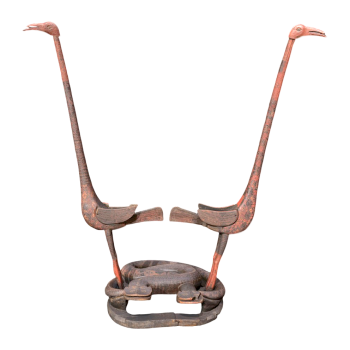
Crane and Snake
The artwork, titled "Crane and Snake", is from Changsha, Hunan Province, China, and belongs to the Warring States Period (475-221 BC) and the State of Chu (about 1046-223 BC). It is made of painted wood and has overall dimensions of 132.1 x 124.5cm (52 x 49 in). The artwork is currently in the collection of the Cleveland Museum of Art.

White jade pottery from the Warring States period
The head of the white jade gourd is intricately carved with phoenix cloud patterns, with traces of vermilion coating on it. The body of the gourd is intricately carved with cloud patterns, and the end is carved with a fish head with a round hole. The Warring States period (475 BC to 221 BC) was the golden age of jade craftsmanship. At that time, jade hairpins were mostly used for decorating hair buns and had exquisite carving and inlay techniques. These jade hairpins usually present patterns of moving plants and mythological legends.

The Chu musical instrument "Tiger Seat Phoenix Frame Hanging Drum" from the Warring States period
Tiger Phoenix Frame Hanging Drum, also known as Tiger Phoenix Frame Hanging Drum or Tiger Bird Frame Drum. Excavated from Tomb No. 2 of the Warring States Chu Dynasty in Jiuliandun, Hubei, it is a typical representative artifact of Chu musical instruments. This is one of the largest tiger shaped phoenix frame drums excavated from a Chu tomb in China. Its height is about 1 meter, with symmetrically arranged double phoenixes and double tigers as the drum frame. The base consists of two crouching tigers with their backs facing each other, with a phoenix standing on each tiger's back. The Tiger Seat Phoenix Frame Hanging Drum was an important type of musical instrument in the Chu state during the Warring States period. It is a lacquerware from the Eastern Zhou Dynasty, unearthed from Tomb No. 2 of Jiuliandun in Zaoyang City, Hubei Province. It is an exquisite handicraft that combines lacquer, carving, and painting techniques organically.

Bronze pterosaur from the Warring States period
The vivid sculpture is reflected in its bronze posture, arrogant head posture, and apparent agility of the body. The strong comma shaped tails and their lively clusters, as well as the double rope pattern on the beard, are typical elements of art during the Warring States period. This statue is one of a pair, measuring 17.78 x 20.8 centimeters. This artifact is currently housed in the Minneapolis Museum of Art.

Popular Models

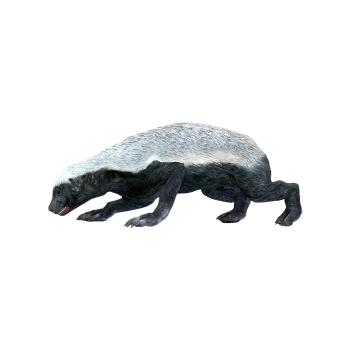
Honey Badger (3D animated model)
192 View
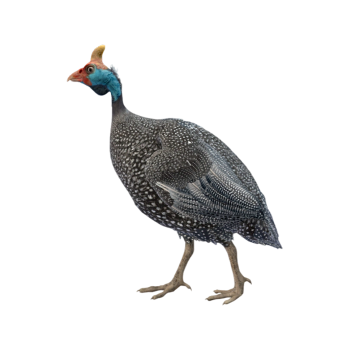
Guinea fowl (3D animated model)
163 View
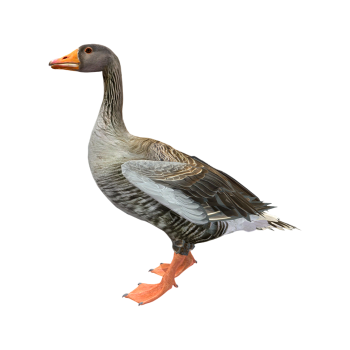
Wild Goose (3D animated model)
185 View
Red Fox (3D animated model)
153 View
Random Model





Apple Watch SE Apple Smart Watch
1071 View


